Best fit
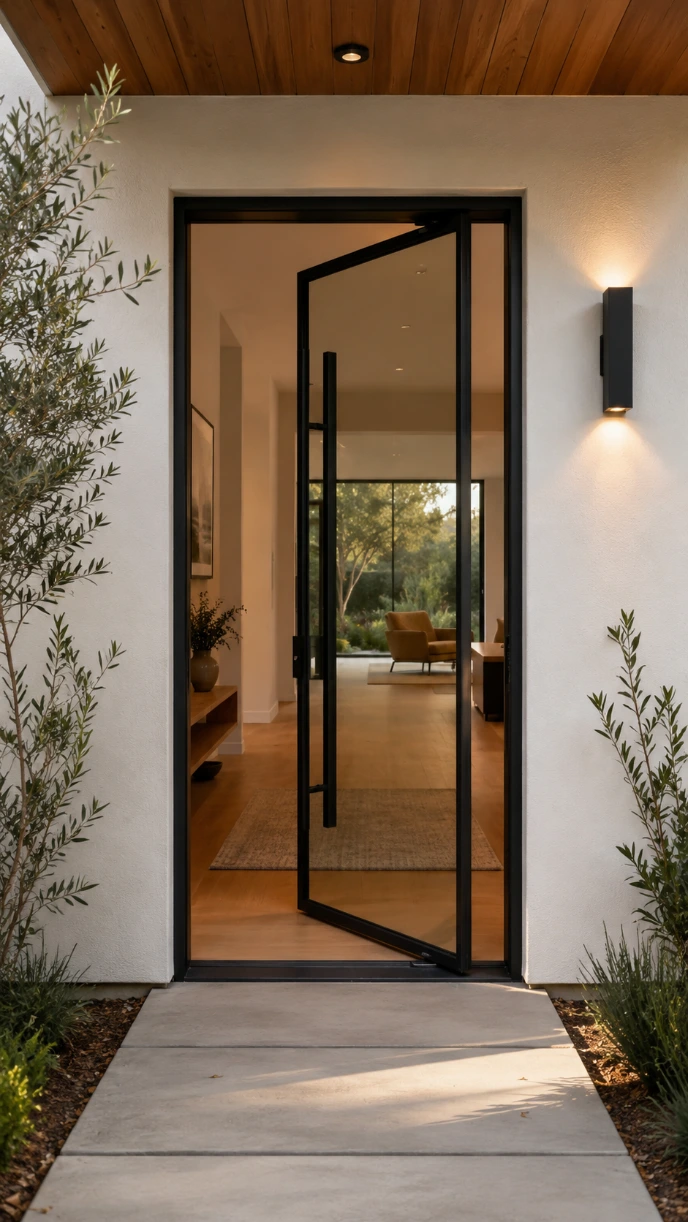
Pivot doors are best for statement entries with enough width, height, swing clearance, and surrounding structure to support an oversized architectural opening.
Planning detail
A useful proposal starts with clear field notes, product direction, and installation conditions. These are the details we review before anything is ordered or scheduled.
Pivot doors are best for statement entries with enough width, height, swing clearance, and surrounding structure to support an oversized architectural opening.
Pivot door documentation covers hardware operation, finish care, glass cleaning, adjustment expectations, and warranty information reviewed with the proposal.
Planning Details
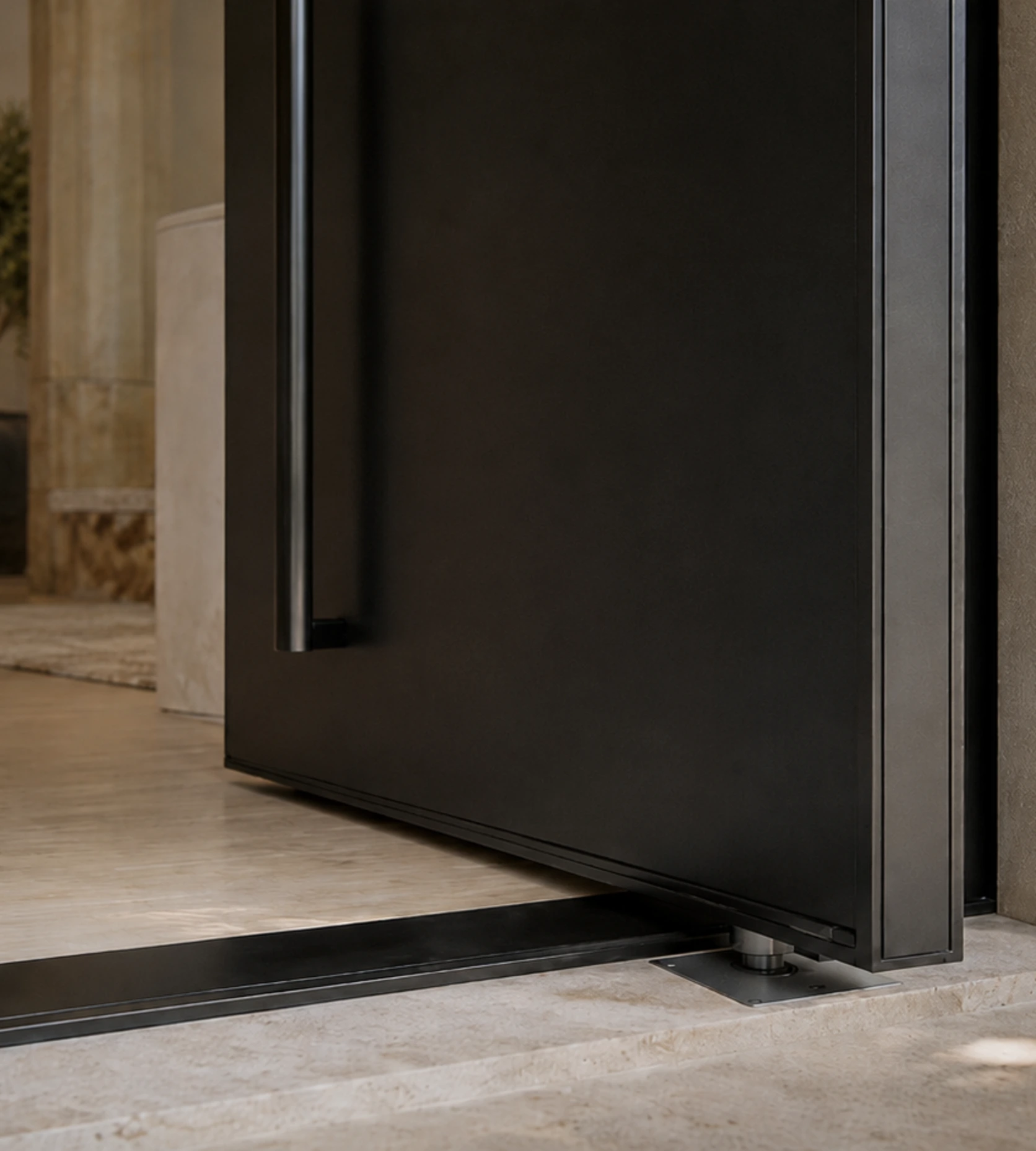
Pivot systems rotate from a point set inward from the jamb instead of relying on traditional side hinges. That changes the planning conversation around size, weight, swing path, threshold, and wall conditions.
Large panels need review for height, width, weight, pivot placement, and comfortable daily use.
Clear, textured, tinted, and privacy glass can be balanced with daylight and entry visibility.
Surrounding glass can widen the entry effect without making the moving panel harder to operate.
Pulls, locks, closer behavior, smart-control readiness, and everyday access are reviewed together.
Site Review
Before a proposal is prepared, Pergo reviews the wall opening, structural conditions, floor transition, exterior exposure, drainage, swing clearance, and surrounding finish details.
Confirm framing, wall depth, header conditions, floor level, and installation access.
Review the swing path, furniture layout, traffic flow, entry landing, and hardware reach.
Coordinate finish direction, glass, threshold, weather sealing, privacy, and security goals.
Related Products
Pivot doors often coordinate with nearby glass, entry, security, and patio-door planning.
Local pivot door planning
Pivot doors need more than a style selection. Pergo reviews opening size, pivot placement, swing clearance, glass, privacy, threshold, weather exposure, hardware, delivery access, and finish direction before preparing a project proposal.
Statement entries for Fremont, San Jose, Palo Alto, Mountain View, Redwood City, Oakland, Walnut Creek, Pleasanton, Dublin, and nearby communities.
Roseville, Sacramento, Rocklin, Folsom, El Dorado Hills, Granite Bay, Lincoln, and foothill-area homes often need sun, clearance, and threshold review.
Large slabs and modern entries require careful field measurements, access review, floor clearance, and surrounding wall coordination.
Pivot entries often pair with glass panels, privacy glass, sidelites, transoms, and nearby security or patio-door planning.
Fit check
Pivot doors need generous swing clearance, structural support, and careful weather planning. If the entry is tight, heavily exposed, or used constantly by children, pets, or deliveries, a different entry-door direction may be more practical.
Common questions
A pivot door is a strong fit for a larger statement entry where clearance, structure, and daily access support the design.
The pivot point, slab size, swing path, threshold, and surrounding glass all need to be reviewed together before ordering.
Yes. Privacy glass, sidelites, transoms, hardware, and finish direction can be planned as one entry system.
No. Narrow entries, tight swing paths, or heavy weather exposure may point to a different entry-door approach.
Next Step
Start with a consultation. We review the opening, product goals, access, finish details, and installation conditions before preparing a written proposal.
Book a Free In-Home Consultation